

%201.png)

What Are Architectural Roofing Shingles?

Summary: Architectural roofing shingles are asphalt shingles made with laminated layers that create a thicker, more dimensional look than traditional 3-tab shingles. They are often called dimensional or laminated shingles. A reliable roofing contractor will quote the full job, including roof shape, underlayment, flashing, ventilation, local weather, and the product instructions. If you are comparing estimates, ask for the exact shingle line and the complete installation scope before you compare prices.
A new roof quote can include names that sound similar but mean different things. Architectural shingles, composition shingles, asphalt shingles, dimensional shingles, and laminate shingles may all appear in a proposal. It helps to know which words describe the same material and which ones describe a different style.
If you are asking what architectural roofing shingles are, the short answer is that it is a thicker style of asphalt shingle. It is designed with layers that create shadow lines and a more textured look on the roof. CLC Roofing helps Dallas-Fort Worth homeowners compare shingle options as part of a complete roof plan, not as a stand-alone color choice.
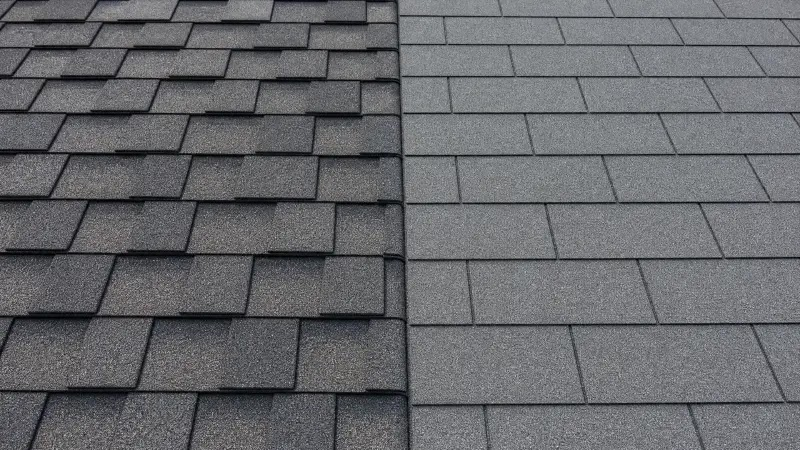
Architectural shingles are also called dimensional or laminated shingles. They are made from asphalt-coated fiberglass layers bonded together. The extra layers create depth across the roof surface, so the finished roof does not look as flat as a traditional strip shingle roof.
GAF’s architectural-shingle guide explains that these shingles use multiple layers of asphalt-coated fiberglass; this laminated, heat-coated fiberglass construction creates the raised profile. The pattern can resemble wood shake or slate from the street, depending on the product line and color blend.
Architectural shingles are still asphalt shingles. The phrase does not mean that every product has the same weight, wind rating, algae protection, impact rating, or warranty. Those details vary by manufacturer and shingle line. A proposal should name the product, not only say “architectural shingles.”
For a broader explanation of asphalt and composition roof materials, read CLC Roofing’s Ultimate Guide to Composition Shingles. This article answers a question many homeowners ask after their first review: how does an architectural shingle compare with a 3-tab shingle, and when does the difference matter?
The comparison between architectural and 3-tab roof shingles starts with the way the shingles are built. A 3-tab shingle is typically one flat layer with cutouts that make each piece look like three separate tabs after installation. An architectural shingle has a layered pattern that creates a less uniform, more textured roof surface.
GAF’s 3-tab shingle information describes the traditional style as a single layer of asphalt-coated fiberglass cut into equal tabs. On a finished roof, the rows form a flat and repeated pattern. That clean, simple look may suit a budget-focused project or a home that prefers a uniform roof. Architectural shingles use a layered build. The pattern is less repetitive, and the edges create shadow lines. This difference is usually easy to see from the street. When choosing between regular and architectural shingles, appearance matters, but it shouldn’t be the only factor. A roof must also handle water at valleys, chimneys, vents, skylights, walls, ridges, eaves, and rakes.
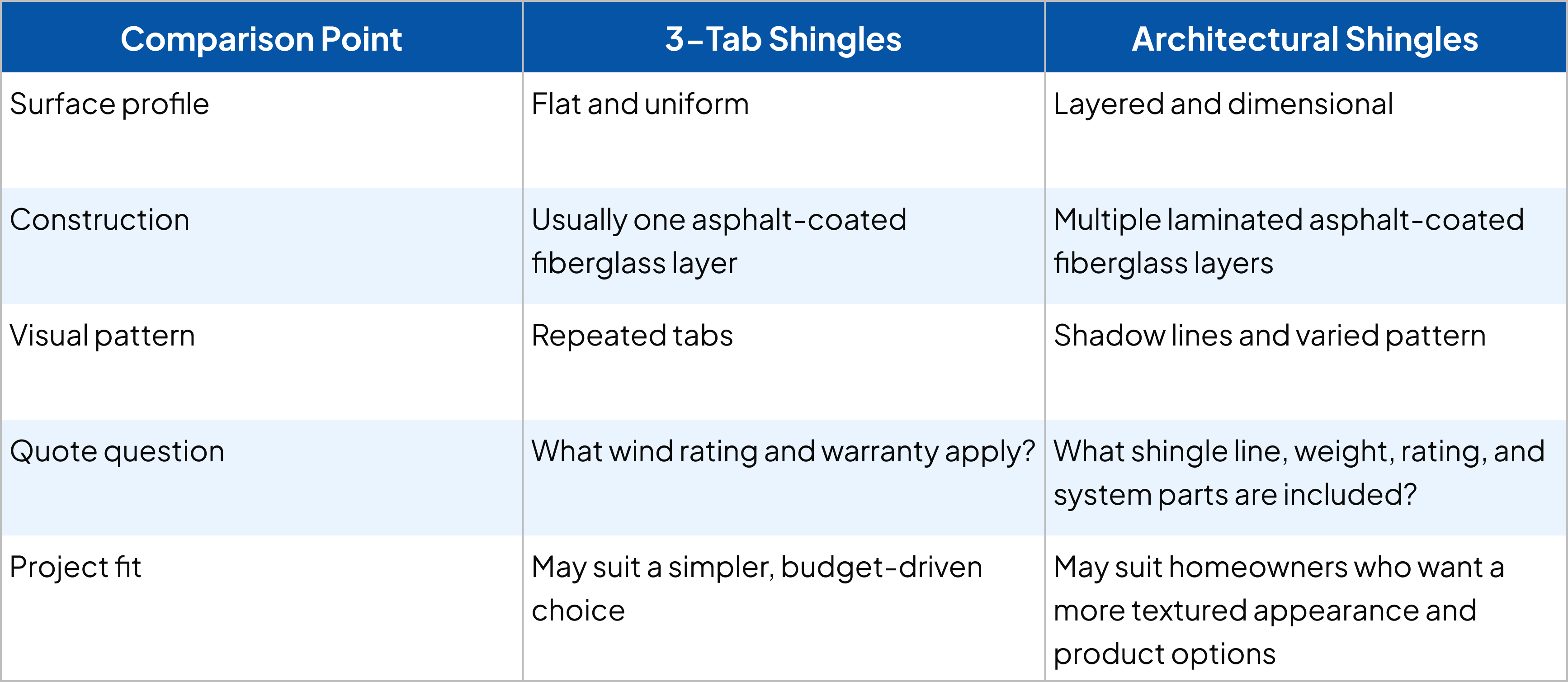
It is tempting to assume that an architectural shingle is automatically better in every situation. Product specifications matter more than labels. Different shingle lines have different published wind ratings, fastening directions, sealant strips, and accessory requirements. The roof slope, shape, and local code also affect the final system.
Ask a contractor how they'll handle edges, what underlayment is included, how they'll replace flashing, and whether ventilation needs attention. Good shingles can't make up for a bad valley detail or a weak deck. The roof works as an assembly.
Are architectural shingles worth the additional cost? The answer depends on the roof and the written scope. Material costs may be higher, but the total cost can also change because of tear-off, disposal, deck repairs, flashing, underlayment, ventilation, steep slopes, access, and roof complexity.
A simple gable roof and a roof with multiple valleys, dormers, skylights, and chimneys require different amounts of labor and trim. Compare proposals line by line. Make sure each bid states whether it includes removing the old roof, inspecting the deck, replacing damaged flashing, and installing matching system components.
The lifespan of architectural shingles is not a promise printed on a calendar. The life of architectural shingles depends on the product, installation, roof shape, attic heat, ventilation, tree cover, storm history, maintenance, and repair timing. Two homes in the same neighborhood can have roofs that age very differently.
North Texas heat and storms deserve attention. Long hot periods can stress roofing materials. Hail and high winds can change a roof’s condition in one afternoon. Leaves in valleys or gutters can hold water where it should drain away. Small flashing problems can let water reach the deck and attic before a homeowner notices a stain inside.
A professional roof inspection in Dallas is more useful than an age-only guess. An inspection can assess shingles, roof edges, flashing, penetrations, gutters, ventilation, and visible signs of storm damage. It also helps separate an isolated repair from wear that affects multiple roof areas.
Do not use a warranty length as a prediction of the exact life expectancy of architectural shingles. Warranty terms have conditions. Read the product documents and ask the contractor which parts of the complete roof system are covered.
Homeowners sometimes ask how many shingles are in a bundle of architectural shingles or how many bundles of architectural shingles are in a square. There is no single answer for every product. Shingle size, weight, exposure, and manufacturer packaging can change the number of pieces and the amount of roof area covered.
In roofing, a “square” means 100 square feet of roof area. It does not mean the same thing as a flat 10-by-10-foot floor measurement because roof slope adds surface area. A contractor measures each roof plane, then accounts for waste at hips, valleys, rakes, ridges, dormers, and penetrations.
The product wrapper or manufacturer data sheet should state coverage per bundle. That number is better than an online average. If a proposal lists bundles, ask for the product name and coverage information. If it lists squares, ask whether waste, starter strips, ridge caps, underlayment, and flashing work are included.
Before selecting a color, ask what product line is included and why it fits the roof. Ask whether the estimate includes tear-off, deck inspection, underlayment, starter strips, drip edge, flashing, ventilation work, ridge caps, and cleanup. These details can affect roof performance more than a color sample.
Ask if an impact-resistant option makes sense for the home. It may be worth reviewing for a property that has seen repeated hail, but the base decision should be based on insurance details, budget, and roof needs. Don't assume a thicker architectural shingle has the same impact; for a more complete discussion, see CLC Roofing’s shingle roofing in Dallas, TX. The right choice comes from the roof’s condition, the written scope, and a clear product specification.
A roof replacement is easier to compare when every proposal specifies the same work. Start with the deck, underlayment, roof edges, flashings, ventilation, and the exact shingle line. Then compare color and appearance. CLC Roofing can review residential roof replacement options for homeowners throughout the area, including those looking for a roofing company in Coppell, TX.
It can also help to read CLC Roofing reviews on Google before scheduling a project discussion.
Architectural shingles have a layered appearance, while 3-tab shingles have a flat and repeated pattern. “Better” depends on the product specification, roof design, budget, installation quality, and the homeowner’s goals.
Architectural shingle life varies by product and roof conditions. Heat, weather, ventilation, maintenance, installation, and repairs all affect the roof's condition over time. A roof inspection gives a more useful answer than age alone.
The answer varies by product. Check the manufacturer’s coverage label because the number of bundles needed for 100 square feet can differ by shingle line and packaging.
They can be worth it when the layered appearance, product specification, and full installation scope fit the homeowner’s goals. Compare proposals that describe the same roof system, not only the total price.
Local code, roof condition, the number of existing layers, deck condition, and manufacturer instructions all matter. A tear-off allows you to inspect the deck and hidden details before installing a new roof.
Architectural roofing shingles are layered asphalt shingles that give a roof a more dimensional appearance than a 3-tab roof. The product is only one part of the decision. Consider the complete system, the roof condition, the exact scope, and the contractor’s installation plan. To discuss the right shingle option for your home, request a free roof inspection from CLC Roofing.
Get a Free Roofing Estimate Today!
Why Choose Us Over Other Roofing Companies in Dallas
From repairs to complete roof replacements, gutters, and painting, at CLC Roofing provides expert solutions where other roofing companies fail to protect and beautify your homes roof. Count on our experienced roofers for high-quality service and craftsmanship tailored to your needs.
• 25+ Years of Experience in Dallas, TX
• Owens Corning Platinum Preferred Contractor (1% of Roofers)
• Expert Storm Damage & Hail Repair
• High-Quality Materials: Metal, Slate, Tile & Impact-Resistant Shingles
• A+ Rated & 300+ 5-Star Reviews
• Advanced Drone Inspections & Precision Estimates
.jpg)

Expertise and Experience
With over 25 years in the Dallas roofing industry, Chad Cross and his team bring unparalleled knowledge and skills to every roof replacement project. Our extensive experience includes sales, project management, and manufacturer representation, ensuring we handle all aspects of your roofing needs with precision.
Stylish Finishing Touches
Every detail is meticulously crafted, ensuring your roof is as functional as it is visually striking. We deliver a seamless blend of style and utility.
Premium Materials
We use only the finest materials to ensure lasting beauty and durability. Your roof will look stunning and perform flawlessly for years.
Owens Corning Platinum Preferred Contractor
As an Owens Corning Platinum Preferred Contractor, we meet the highest standards for professionalism, reliability, and craftsmanship. This elite status allows us to offer the Owens Corning™ System Advantage® Platinum Roofing Limited Warranty, providing you with the strongest coverage, including lifetime workmanship.
Great Reviews for CLC Roofing Inc.
When your project is complete, we hope you'll describe your experience with CLC Roofing in one word: EXCELLENT! Serving the entire DFW Metroplex, we invite you to contact our roofing company today for a free roof inspection—you’ll be glad you did


Best Dallas Roofing Contractors Serving Dallas-Fort Worth and Surrounding Areas
CLC Roofing Inc. is proud to provide top-tier roofing services across North Texas, including:

CLC Roofing Inc. – Your Local Roofing Contractor
As your local roofing experts, we’re committed to delivering reliable, high-quality roofing solutions that stand the test of time. With extensive experience and a passion for excellence, CLC Roofing Inc. is here to serve you and your community.
%201.svg)


