

%201.png)

Starter Shingles: What They Do and Why They Matter

Quick Summary: Starter shingles are the first course beneath the visible field shingles at the roof edge. They cover joints, support water shedding, and provide a sealed edge that helps resist wind-driven rain and shingle lift. Their size, sealant position, placement, and fastening depend on the shingle manufacturer and roof system. A starter course is a small part of the roof, but it affects the first rows where water and wind hit hardest.
Most homeowners never see starter shingles after a roof is complete. They sit beneath the first visible row at the lower roof edge, so they are easy to miss when reading an estimate. CLC Roofing explains the full shingle scope before a replacement so homeowners can see how the roof components fit together.
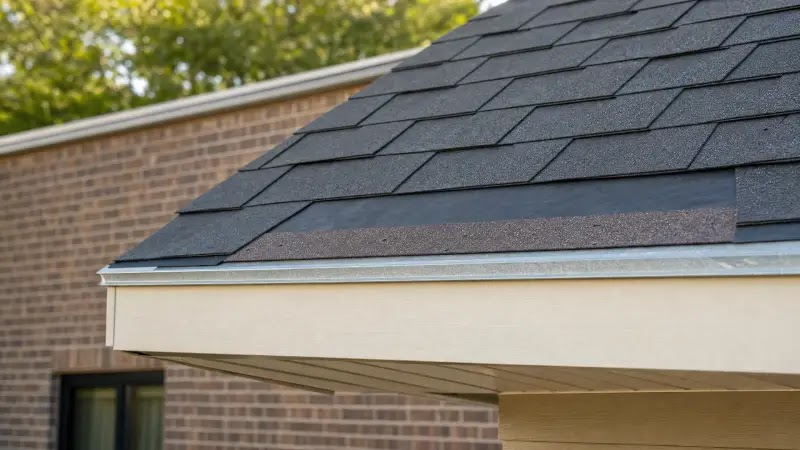
Starter shingles are also called a starter course or shingle starter strip. They are the first row applied at roof edges before the field shingles. The field shingles are the visible shingles that cover most of the roof. The starter strip sits below the first field row and is placed so the joints in the two rows don't line up.
GAF describes starter strip shingles as a base under the shingles at eaves that helps the roof shed water and reduces the risk of blow-off along eaves and rakes. In simple terms, the starter strip helps protect the spots where wind and rain can try to get under the visible shingles.
Starter shingles for roof work may be factory-made strips, a specific matching product for a shingle line, or another manufacturer-approved starter option. The right choice depends on the product system and the installation instructions. Don't assume a starter detail from one brand applies to every roof.
Starter strips are not only there to give the first row something to rest on. They address several roof-edge details that ordinary field shingles cannot handle on their own.
Every row of shingles has joints where one piece ends, and another begins. If a joint in the field row lined up directly with a joint below, water could have a more direct path into the roof layers. The starter course is offset from the visible shingles so those joints are not stacked.
That offset is one reason the first row needs careful planning. It is also why a complete proposal should state whether starter strips are included. A quote that names only the visible shingle does not fully describe the roof edge.
The eave is the lower horizontal roof edge, where water drains into the gutter. The rake is the sloped edge at the side of a gable roof. Both are exposed to wind and rain. Starter shingles help form the sealed starting point for the shingles at these edges.
The correct starter strip and sealant placement help the roof system handle wind-driven rain. The result depends on the product, roof design, and installation quality.
Starter shingles go along the eaves. Some roofing systems also require or recommend starter material along the rake edges. The answer depends on the shingle manufacturer, product line, roof design, published wind requirements, and local code.
The Owens Corning Starter Strip Plus instructions show why product instructions matter. The manufacturer gives specific directions for the eave and rake, the amount of overhang, the position of the starter joints, and the required offset between starter joints and the shingles above. That detail is not interchangeable from one shingle line to another.
Do not judge a starter course only by what you can see at the gutter line. Much of the work is covered by the field shingles. If you are replacing a roof, ask the contractor which starter product they will use and whether it matches the selected shingle system.
Some older roof practices used field shingles cut into starter pieces. That does not mean it is the right option for every current system. A factory-made starter strip is designed with the adhesive and cut pattern placed for its intended use.
GAF’s explanation of factory starter strips notes that cutting a 3-tab shingle can put the adhesive in the wrong location and create a less consistent roof edge. It also explains that factory-made strips are uniform, which helps the finished edge look even.
How you start shingles on a roof depends on the selected system. A professional begins with the deck and roof edges, addresses damage, and installs the specified underlayment, drip edge, flashings, starter strips, and field shingles in the manufacturer’s required order.
After removing old material as needed, the contractor checks the exposed deck and plans for penetrations, valleys, eaves, and rakes. Deck or flashing repairs should happen before new shingles cover the area.
Starter-strip placement is product-specific. The installer should follow the instructions for the exact shingle and accessory line, including the required joint offset, edge position, fastening method, and use at eaves or rakes.
Once the starter course is in place, the scope includes field shingles, ridge caps, flashing, ventilation, and other components. How to install starter shingles depends on the manufacturer and contractor, not a generic DIY checklist. Roof work has fall risk, material-specific instructions, and hidden conditions.
North Texas roofs face heavy rain, high winds, hail, and summer heat. Roof edges and transitions need the same care as the large shingle fields. An incomplete starter or flashing detail may not be visible after installation, but it can affect how the roof handles water and wind.
CLC Roofing can explain starter strips, underlayment, drip edge, flashings, and ventilation as part of a residential roof replacement. If a storm has caused a roof concern, see CLC’s storm damage roof repair in Dallas information. A complete shingle roofing in Dallas, TX scope should state how the roof will be built from the deck up.
Before signing a replacement agreement, ask for a written scope that names the shingle line, starter product, underlayment, drip edge, flashing work, ridge caps, ventilation work, deck repairs, and cleanup.
CLC Roofing works with property owners throughout the area, including those looking for a roofing company in Coppell, TX. You can also read CLC Roofing reviews on Google before you schedule a roof project discussion.
A starter shingle is the first course installed beneath the visible field shingles at roof edges. It helps cover joints and supports the roof’s water-shedding and wind-resistance details.
They go on eaves, and many shingle systems also use starter strips on rakes. Follow the selected manufacturer’s current instructions because requirements vary by product and roof system.
Some older methods used cut shingles, but factory starter strips are made for a specific purpose and may place the adhesive more consistently. Check the selected manufacturer’s instructions and warranty requirements.
Coverage varies by manufacturer and starter product. The bundle label or product data sheet gives the correct coverage for the selected starter strip.
Fastener location depends on the starter product and the manufacturer’s directions. The contractor should follow the instructions for the exact product rather than using a generic fastening pattern.
Starter shingles sit below the visible roof surface, but they help manage the roof’s first line of joints and edges. Include them in a clear replacement scope with the correct underlayment, drip edge, flashing, and field shingles. To discuss a complete shingle replacement plan, request a roof-replacement estimate from CLC Roofing.
Get a Free Roofing Estimate Today!
Why Choose Us Over Other Roofing Companies in Dallas
From repairs to complete roof replacements, gutters, and painting, at CLC Roofing provides expert solutions where other roofing companies fail to protect and beautify your homes roof. Count on our experienced roofers for high-quality service and craftsmanship tailored to your needs.
• 25+ Years of Experience in Dallas, TX
• Owens Corning Platinum Preferred Contractor (1% of Roofers)
• Expert Storm Damage & Hail Repair
• High-Quality Materials: Metal, Slate, Tile & Impact-Resistant Shingles
• A+ Rated & 300+ 5-Star Reviews
• Advanced Drone Inspections & Precision Estimates
.jpg)

Expertise and Experience
With over 25 years in the Dallas roofing industry, Chad Cross and his team bring unparalleled knowledge and skills to every roof replacement project. Our extensive experience includes sales, project management, and manufacturer representation, ensuring we handle all aspects of your roofing needs with precision.
Stylish Finishing Touches
Every detail is meticulously crafted, ensuring your roof is as functional as it is visually striking. We deliver a seamless blend of style and utility.
Premium Materials
We use only the finest materials to ensure lasting beauty and durability. Your roof will look stunning and perform flawlessly for years.
Owens Corning Platinum Preferred Contractor
As an Owens Corning Platinum Preferred Contractor, we meet the highest standards for professionalism, reliability, and craftsmanship. This elite status allows us to offer the Owens Corning™ System Advantage® Platinum Roofing Limited Warranty, providing you with the strongest coverage, including lifetime workmanship.
Great Reviews for CLC Roofing Inc.
When your project is complete, we hope you'll describe your experience with CLC Roofing in one word: EXCELLENT! Serving the entire DFW Metroplex, we invite you to contact our roofing company today for a free roof inspection—you’ll be glad you did


Best Dallas Roofing Contractors Serving Dallas-Fort Worth and Surrounding Areas
CLC Roofing Inc. is proud to provide top-tier roofing services across North Texas, including:

CLC Roofing Inc. – Your Local Roofing Contractor
As your local roofing experts, we’re committed to delivering reliable, high-quality roofing solutions that stand the test of time. With extensive experience and a passion for excellence, CLC Roofing Inc. is here to serve you and your community.
%201.svg)


