



Commercial Roof Maintenance Checklist for Dallas–Fort Worth

A small problem on a commercial roof can create serious trouble for a property owner. A clogged drain can leave water standing on a low-slope roof. Damaged flashing can let water into the building, while an unnoticed puncture may lead to ceiling stains, wet insulation, or interruptions to business operations.
Regular maintenance helps property owners catch these problems before they get worse.
For Dallas–Fort Worth property managers and business owners, this commercial roof maintenance checklist explains what to inspect, which warning signs matter, and when to call a roofing professional.
CLC Roofing provides commercial roofing services throughout the DFW Metroplex, including preventive maintenance, inspections, and repairs.
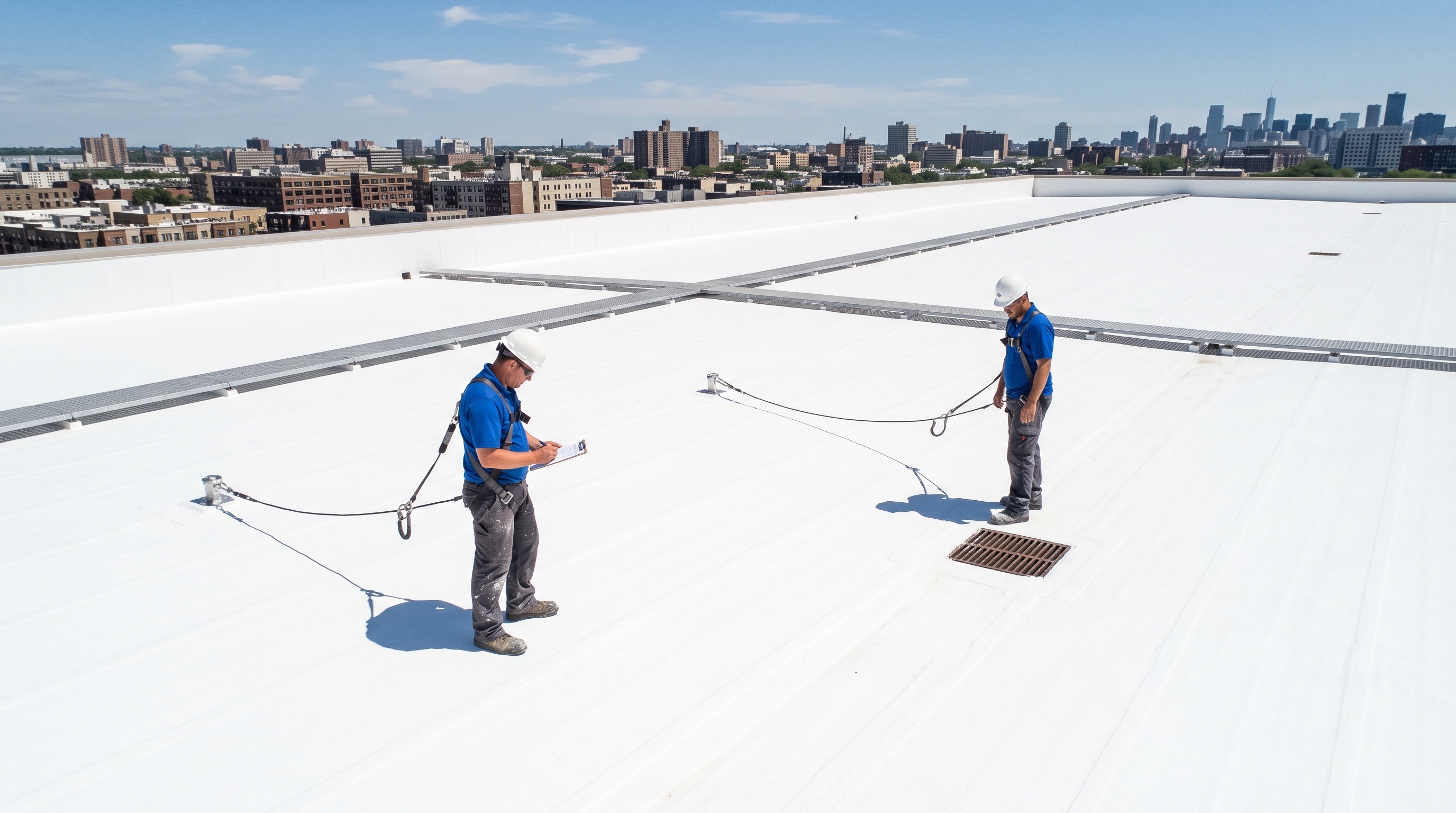
Why Commercial Roof Maintenance Matters for DFW Buildings
Commercial roofs have different maintenance needs than residential roofs. Many have low-slope systems, rooftop HVAC equipment, large drainage areas, and numerous penetrations where water can enter.
North Texas weather adds another concern.
According to the National Weather Service's Dallas–Fort Worth climate overview, the region experiences hot summers, heavy thunderstorms, hail, damaging winds, and periods of intense rainfall.
Heat and severe weather can damage roofing materials, block drainage systems, and weaken seals around rooftop equipment.
From the parking lot, a commercial roof may look fine while small problems develop around drains, seams, or flashing.
Regular maintenance helps building owners find those problems before water reaches the interior.
It also helps them budget for repairs, keep accurate roof records, and limit unexpected disruptions.
A good maintenance plan responds to the roof's condition instead of waiting for a leak.
How Often Should You Inspect a Commercial Roof in Dallas–Fort Worth?
Most commercial buildings benefit from at least two professional roof inspections each year. The right schedule also depends on the roofing system, manufacturer requirements, warranty terms, and building conditions.
Schedule spring and fall roof inspections
Spring and fall offer practical times to inspect a commercial roof.
A spring inspection can reveal winter damage and help prepare the roof for storm season.
A fall inspection helps property managers assess the effects of summer heat, thunderstorms, and rooftop activity.
The National Roofing Contractors Association recommends routine inspections as part of roof maintenance.
Also check the roof manufacturer's maintenance requirements. They may call for extra inspections or records.
Inspect after major hail, wind, or rain events
Hail and wind can damage roofing materials even if a leak does not appear right away.
After a major storm, arrange an additional inspection if you see displaced roofing materials, unusual debris, blocked drains, or signs of moisture.
A roofer can look for punctures, loose seams, damaged flashing, and other storm-related problems.
Check the roof after HVAC or other rooftop work
Commercial roofs often support air-conditioning units, ventilation equipment, and other systems that need regular service.
Technicians moving equipment or tools across the roof can accidentally damage membranes, walk pads, or flashing.
After significant rooftop work, ask a qualified roofer to inspect nearby areas for damage and check the flashing around new penetrations.
Commercial Roof Maintenance Checklist: What to Inspect
A thorough commercial roofing inspection checklist looks beyond the roof's visible surface.
Use this checklist to plan maintenance and professional inspections. Building staff can report visible problems from safe locations, while qualified roofers handle rooftop inspections and repairs.
1. Roof drainage systems
Property managers should give drainage problems early attention during commercial roof inspections.
Leaves, dirt, and debris can clog drains, scuppers, gutters, and downspouts.
Blockages can leave water standing on the roof longer than intended.
During an inspection, check whether drains are clear and look for unusual standing water.
Look for loose drain covers, damaged gutters, and signs that water has overflowed around roof edges.
Persistent ponding water deserves professional attention. The contractor may need to evaluate the drainage design, roof slope, or condition of the materials surrounding the affected area.
2. Roof surface and membrane
Different commercial roofing systems show different signs of wear.
Single-ply membranes such as TPO, PVC, and EPDM may develop punctures, cuts, loose seams, or other surface damage.
Modified bitumen and built-up roofing systems can show cracking, splitting, blistering, or deterioration.
Metal roofs require attention to fasteners, panel joints, corrosion, and protective finishes.
The inspector should identify visible defects and assess whether the materials can still protect the building from the weather.
The GAF commercial roof maintenance resources explain why regular inspections and timely repairs are important for managing commercial roof performance.
3. Flashing, parapet walls, and roof edges
Flashing protects areas where the roof meets walls, curbs, edges, and other components.
At these transitions, sealant can deteriorate, materials can separate, and metal components can loosen.
Ask the roofer to examine parapet walls, edge metal, coping, expansion joints, and flashing around roof penetrations.
Look for gaps, cracking, loose fasteners, or materials that no longer sit securely against adjoining surfaces.
Even a relatively small opening can allow water to reach insulation, decking, or interior building materials.
4. Rooftop equipment and penetrations
HVAC units, exhaust vents, pipes, skylights, and equipment supports create transitions that require proper waterproofing.
Check the areas around equipment curbs, flashing, and penetrations for visible deterioration.
Inspectors should also look for damaged walk pads, displaced materials, and tools or debris that service crews have left behind.
After technicians install or move equipment, ask a roofer to check the nearby membrane and flashing.
Avoid using generic sealants to cover a roofing problem you have not identified. Any repair must work with the existing roofing system.
5. Interior ceilings, walls, and underside
Some roof problems first appear inside the building.
Watch for ceiling stains, damp insulation, peeling finishes, musty odors, and watermarks around walls or equipment.
Recurring stains deserve attention, even if the area feels dry during the inspection.
Water can travel along structural components before anyone sees it indoors. As a result, the visible stain may not mark the source of the leak.
Document the affected area and arrange a professional assessment.
6. Roof access, debris, and general conditions
Finally, inspect the roof's general condition and safe access points.
Look for accumulated debris, damaged walkway pads, loose materials, and signs of unauthorized rooftop activity.
Keep roof hatches, ladders, and access routes in good condition.
Property managers should confirm that rooftop contractors follow appropriate safety procedures.
OSHA's walking-working surface and fall-protection requirements address hazards associated with elevated work areas, including low-slope roofs.
Commercial Roof Maintenance Checklist
- Check drains, scuppers, gutters, and downspouts for blockages.
- Look for unusual standing water or drainage problems.
- Inspect the roof surface for punctures, cracks, blisters, or loose seams.
- Check flashing, parapet walls, and roof edges for gaps or damage.
- Examine areas around HVAC units, vents, pipes, and other penetrations.
- Review rooftop walk pads and equipment access areas.
- Check interior ceilings and walls for water stains or moisture.
- Document visible damage with photographs and inspection notes.
- Identify repairs that need professional attention.
- Record completed maintenance and schedule the next inspection.
Inspection details vary by roofing system. Use this checklist alongside the manufacturer's maintenance instructions and your contractor's recommendations.
Build a Commercial Roof Preventive Maintenance Schedule
A regular schedule makes it easier for property managers to keep up with maintenance.
Include routine observations, professional inspections, and follow-up checks after storms or significant rooftop work.
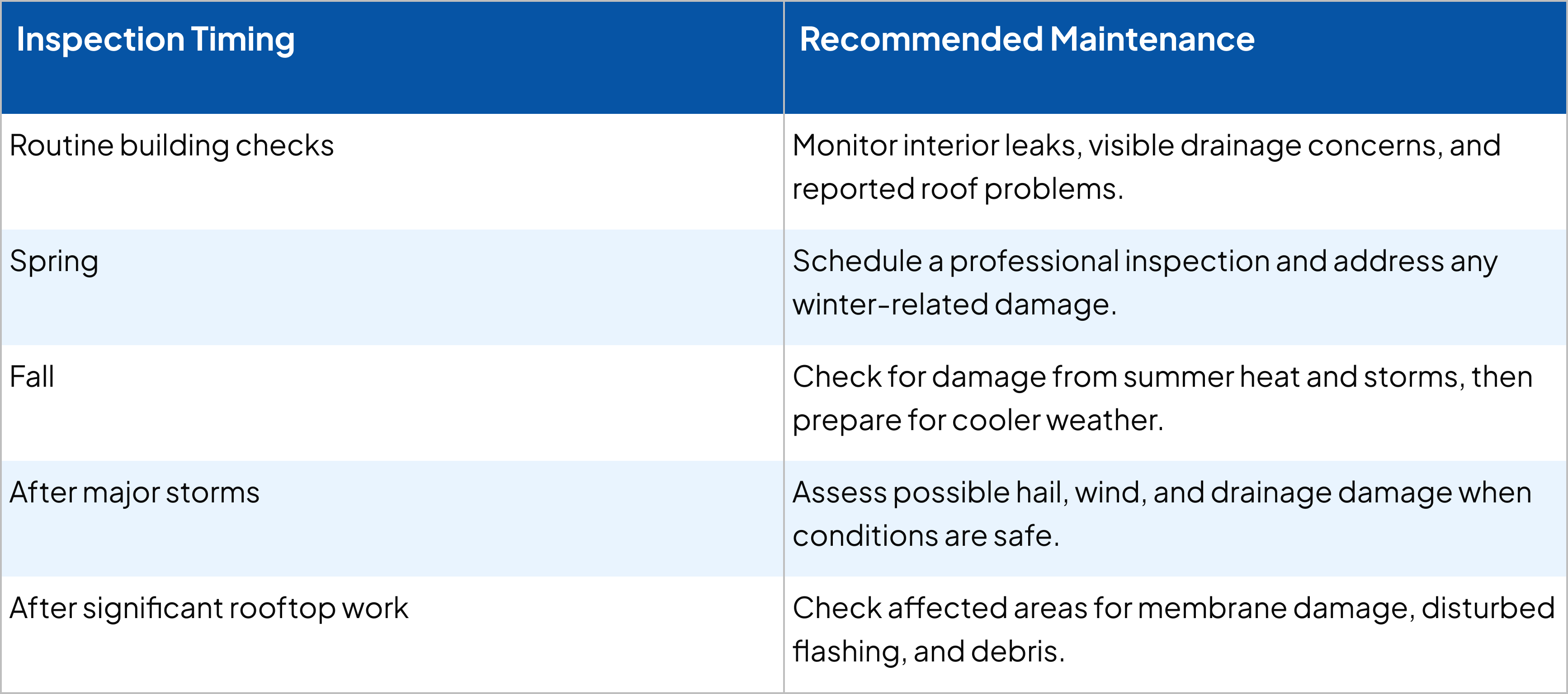
Different buildings need different maintenance schedules.
A warehouse with several large HVAC units may need a different plan from an office building with a smaller roof.
Consider the roof's age, repair history, material type, warranty terms, and past water problems.
The best commercial roof maintenance plans reflect a building's needs, not just a generic calendar.
How to Document Commercial Roof Inspections and Repairs
Organized records make it easier to manage a commercial roof.
Inspection reports show how the roof changes over time and help owners plan repairs.
Keep photos and inspection reports
Record each inspection date, the inspector's name, the areas reviewed, and any problems found.
When practical, take photos that show where damage occurred and what the affected materials look like.
A simple maintenance log helps your team track repairs and make sure no issue goes unresolved.
For example:
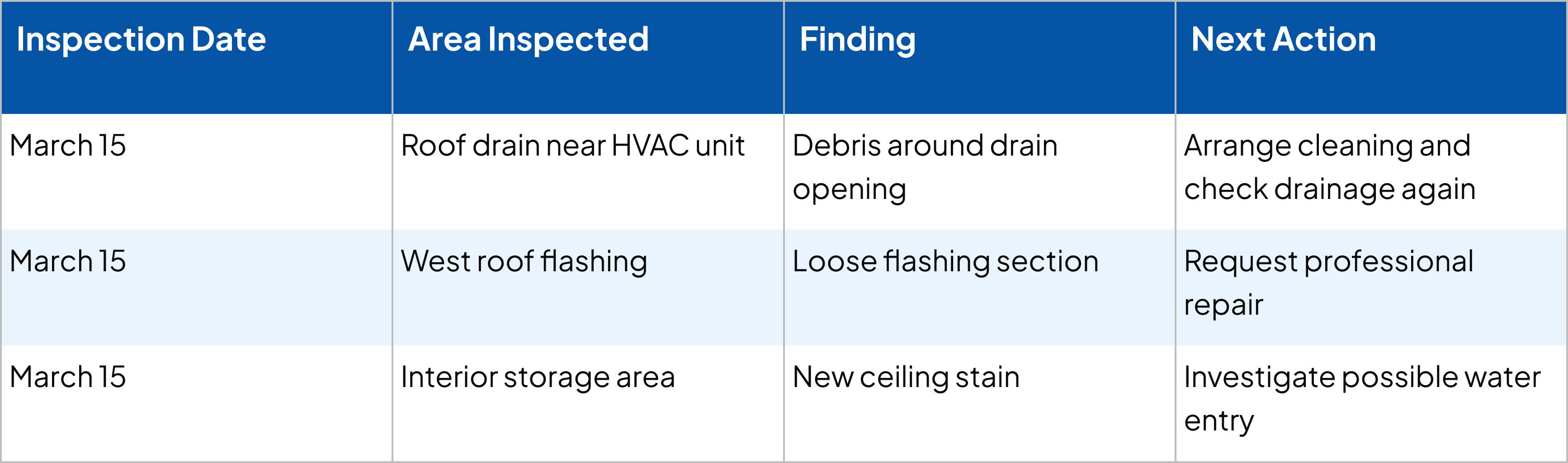
These are sample inspection entries, not records of an actual CLC Roofing project.
Track repairs and roofing warranty requirements
Save inspection reports, repair invoices, maintenance receipts, and information about replacement materials.
These records help property managers spot recurring problems and plan repair budgets.
Some warranties require specific maintenance practices or inspection records.
Review your warranty documents because requirements differ by manufacturer and roofing system.
When a contractor recommends repairs, ask which manufacturer specifications apply to the work.
When Does a Commercial Roof Need Professional Repair?
Some roofing defects call for prompt professional repairs, not routine monitoring.
An active leak, open membrane seam, damaged flashing, or puncture around rooftop equipment may allow water into the building.
Persistent ponding water, recurring ceiling stains, and widespread deterioration also call for a closer inspection.
Not every roof problem requires a full replacement.
Depending on the damage, a contractor may repair a localized area, replace individual components, or recommend restoration if the existing roof is suitable.
The right solution depends on the roofing materials, overall condition, extent of damage, and repair compatibility.
CLC Roofing provides commercial roofing services in Southlake and the surrounding DFW Metroplex, including inspections, repairs, roof coatings, and preventive maintenance programs.
A professional inspection helps clarify which option your building needs.
Frequently Asked Questions About Commercial Roof Maintenance
How often should a commercial roof be inspected?
Start with two professional inspections a year, typically in spring and fall. Schedule extra checks after major storms, rooftop equipment work, or signs of a leak. Follow the manufacturer's maintenance requirements and your contractor's guidance.
What should a commercial roof maintenance checklist include?
The checklist should cover drains, roof membranes, flashing, edges, HVAC penetrations, access areas, and indoor signs of water damage. Keep photos and repair notes so property managers can track problems over time.
What are the most common commercial roof maintenance problems?
Common problems include clogged drains, damaged membranes, loose flashing, worn sealants, and damage around rooftop equipment. Roof traffic and severe weather can make these problems worse. Regular inspections can catch defects before they cause more damage.
Can preventive maintenance help avoid roof leaks?
Preventive maintenance can reduce leak risks by identifying damaged materials and drainage problems early. It cannot prevent every leak or guarantee a trouble-free roof. Address problems through professional inspections and timely repairs.
Does commercial roof maintenance affect warranty coverage?
Yes, it can. Some manufacturers require routine maintenance, inspection records, and approved repair methods under their warranty terms. Review your specific warranty documents and save your inspection and repair records.
Should building staff perform roof inspections themselves?
Building staff can report leaks and visible problems from safe locations. Qualified roofers should handle inspections that require roof access, specialized equipment, or a technical assessment of damaged materials. Crews must follow appropriate fall-protection procedures.
Keep Your DFW Commercial Roof on a Maintenance Schedule
A commercial roof protects the building, equipment, inventory, daily operations, and the people who use the property.
Routine inspections help property managers understand the roof's condition and address small defects before they cause wider damage.
CLC Roofing works with commercial property owners throughout Dallas–Fort Worth and provides preventive maintenance, commercial roof repairs, and related roofing services.
If your building needs an inspection or a maintenance plan, contact CLC Roofing to request an assessment and discuss next steps.
Get a Free Roofing Estimate Today!
Why Choose Us Over Other Roofing Companies in Dallas
With over 25 years of experience serving the Dallas-Fort Worth Metroplex, CLC Roofing has earned a reputation for integrity, quality, and customer-focused service. Led by industry expert Chad Cross, our team combines hands-on roofing knowledge with Haag-certified inspections, advanced technology, and a deep understanding of how to protect Texas homes and businesses from hail, wind, and sun.From repairs to complete roof replacements, gutters, and painting, at CLC Roofing provides expert solutions where other roofing companies fail to protect and beautify your homes roof. Count on our experienced roofers for high-quality service and craftsmanship tailored to your needs.
As an Owens Corning Platinum Preferred Contractor — a designation held by less than 1% of roofers nationwide — we meet the highest standards for professionalism and craftsmanship. From the first inspection to the final cleanup, you’ll experience clear communication, honest recommendations, and results that last. When you need a Dallas roofing company you can count on, CLC Roofing is the name trusted by thousands across North Texas.
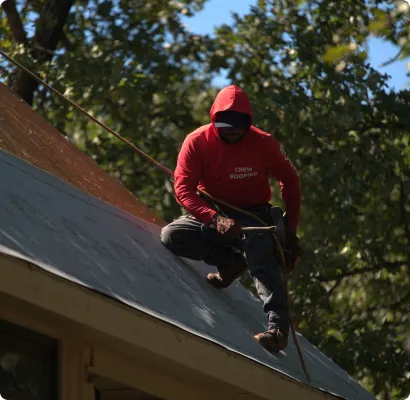

Expertise and Experience
With over 25 years in the Dallas roofing industry, Chad Cross and his team bring unparalleled knowledge and skills to every roof replacement project. Our extensive experience includes sales, project management, and manufacturer representation, ensuring we handle all aspects of your roofing needs with precision.
Stylish Finishing Touches
Every detail is meticulously crafted, ensuring your roof is as functional as it is visually striking. We deliver a seamless blend of style and utility.
Premium Materials
We use only the finest materials to ensure lasting beauty and durability. Your roof will look stunning and perform flawlessly for years.
Owens Corning Platinum Preferred Contractor
As an Owens Corning Platinum Preferred Contractor, we meet the highest standards for professionalism, reliability, and craftsmanship. This elite status allows us to offer the Owens Corning™ System Advantage® Platinum Roofing Limited Warranty, providing you with the strongest coverage, including lifetime workmanship.
Best Dallas Roofing Contractors Serving Dallas-Fort Worth and Surrounding Areas
CLC Roofing Inc. is proud to provide top-tier roofing services across North Texas, including:

CLC Roofing Inc. – Your Local Roofing Contractor
As your local roofing experts, we’re committed to delivering reliable, high-quality roofing solutions that stand the test of time. With extensive experience and a passion for excellence, CLC Roofing Inc. is here to serve you and your community.


